For Clients and Event Organizers, you can think of us as an extension of your events team. With our vast network and knowledge of trusted and vetted speakers, we do all the heavy lifting to ensure a smooth and enjoyable journey in your talent booking process.
About the event
Private Event for Senior Leaders
This invite-only gathering will convene approximately 125 senior leaders across insurance, financial services, technology, data, fintech, and emerging underwriting technology for a day and a half of candid conversation around one central question: how can data and emerging technology better serve people while creating meaningful business advantage?
The opening-morning keynote will establish the intellectual foundation for the program with a clear-eyed assessment of the rapidly evolving data and AI landscape. Rather than simply celebrating the possibilities of AI, the conversation should examine what is real versus hype, where organizations actually stand, where disruption is likely to occur, and what leaders should be preparing for now — from changes in jobs and operating models to revenue opportunities, competitive positioning, partnerships, governance, and customer expectations.
Ideally structured as a 15-minute keynote followed by a 20–25-minute moderated fireside conversation, the session should provoke discussion rather than attempt to provide every answer. The broader program will then move from insight into action through think-tank-style case studies, strategic conversations around technology and data partnerships, and intentionally curated networking designed to create new relationships and opportunities.
- Location - Scottsdale, AZ
- Date - November 5th. 2026

Top-Ranked Futurist • Future of Work & Leadership Strategist • Two-Time Bestselling Author
Recognized as one of Forbes' top futurists, Heather E. McGowan helps organizations understand how technological, cultural, and workforce change reshapes not simply what people do, but how they think, learn, collaborate, and create value.
Rather than treating AI as purely a technology story, Heather examines what happens when technology begins absorbing more cognitive work and organizations must reconsider leadership, jobs, talent, decision-making, learning, and competitive advantage.
Her clients include organizations such as JPMorgan Chase, Mastercard, MetLife, Google, Microsoft, KPMG, and other major enterprises, and her current AI work challenges organizations to move beyond the question of what technology will replace and instead determine how technology can expand human capability. Her technology keynote material specifically addresses moving from AI hype toward impact and building teams in which people and technology augment one another.
Her mission is simple yet powerful: help leaders Solve Tomorrow’s Problems™ by teaching them to ask better questions today.
Speaker Fee -
- $32,000 plus RT First Class Air, Ground Transportation in home and event city, hotels, and reasonable meals. A $3200 flat travel buyout is offered in lieu of providing itemized Travel and Expenses.
"Heather McGowan is outstanding at her craft, tailoring her presentation for maximum impact. She will leave your audience with clear imperatives and fired up to race into action!" -President, Abbvie North America
"Heather’s presentation style connects to the audience regardless of how your brain is wired. A broad coalition of colleagues found immediate, actionable application of her message" -Erin Watkins, SPHR, VP Transformation, Travelport


Speaker Highlights
Speaker Reel - https://www.youtube.com/watch?v=q7gLE-9R34M&t=13s
Gravity Speaker Profile - https://www.gravityspeakers.com/speakers/heather-mcgowan
Speaker Website - https://heathermcgowan.com/
Why Heather Is the Right Fit
- Brings an important human and leadership counterpoint to a conversation that could otherwise become dominated by technology.
- Answers the question: what happens to jobs, roles, leadership, and organizational capability as AI progresses?
- Does not approach AI as either utopia or catastrophe; her work focuses on understanding what technology changes while identifying where human capability becomes increasingly valuable.
- Works extensively with senior corporate audiences, including organizations within financial services.
- Her framework around augmentation rather than simple automation provides a sophisticated way to discuss how AI may reshape work without defaulting to simplistic predictions about job replacement.
- Strong at translating complex structural shifts through research, visual frameworks, and accessible executive storytelling.
- Her emphasis on asking better questions would complement the think-tank nature of the gathering and establish the mindset for the collaborative conversations that follow.
Recommended Keynote
The Augmented Imperative: Unleashing Human Potential in the AI Era
Heather's core argument is that organizations are often asking the wrong question about AI.
The strategic question is not simply "What can AI replace?" It is "What becomes possible when technology assumes more of the work — and what must humans, leaders, and organizations become capable of doing next?"
Her current technology work specifically helps organizations rethink the role of technology, develop AI-augmented teams, activate uniquely human capabilities such as curiosity and collaborative problem-solving, and move from hype toward meaningful business impact.
For this audience, Heather could frame the opening around the broader consequences of AI acceleration:
- Which work becomes automated, augmented, or newly possible
- How competitive advantage changes when technology becomes broadly accessible
- Why adaptability and learning capacity become strategic assets
- What executives should be thinking about as jobs and organizational structures evolve
- How leaders build cultures capable of experimenting without losing trust
- Why the quality of the questions organizations ask may matter more than access to any particular tool
The fireside could then bring the conversation directly into financial services and examine how leaders prepare organizations and people for a future that cannot yet be fully predicted.

General Manager, AI/ML & Analytics – AWS • Enterprise AI Transformation Leader • Former Wells Fargo, Capital One & JPMorgan Chase Executive
Tia White is a pioneering AI and technology executive helping shape how enterprises adopt artificial intelligence, machine learning, and next-generation digital infrastructure. As a General Manager at Amazon Web Services (AWS), she leads product, engineering, and go-to-market strategy across emerging technologies and AI-powered systems.
Her perspective is particularly relevant to this gathering because her career sits directly at the intersection of financial services, enterprise technology, data, and transformation. Before joining AWS, Tia held leadership roles at Wells Fargo, Capital One, and JPMorgan Chase, giving her first-hand experience navigating technology change inside some of the world’s largest and most highly regulated financial organizations.
Today, she helps organizations understand not only what AI makes possible, but what must change across infrastructure, data strategy, governance, talent, leadership, and organizational design to translate technological capability into meaningful business outcomes. AWS currently identifies her as General Manager of OpenSearch, and she appeared as a 2026 AWS Summit keynote speaker focused on AI, modernization, and agentic systems.
- Speaking Fee - $40,000*
- Travel and Expenses - Event City Expenses [Ground Transfers, Hotel]
* RT Airfare and Home Ground built into Speaking Fee
Speaker Highlights
Fintech Americas - https://www.youtube.com/watch?v=xPU41SSk8do
The Foundational Elements to Innovating in your Business with AI - https://www.youtube.com/watch?v=wONeI3-4LIc&t=2s
Why Tia Is the Right Fit
- Direct experience across both sides of this conversation: enterprise financial services leadership at Wells Fargo, Capital One, and JPMorgan Chase followed by senior AI and technology leadership at AWS.
- Brings an operator's perspective, rather than commenting on AI solely as an analyst or futurist.
- Deep understanding of the realities facing regulated industries, including privacy, governance, security, infrastructure, and responsible deployment.
- Can connect AI strategy to the issues this audience cares about most: competitive advantage, customer experience, operating models, talent, data access, collaboration, and investment priorities.
- Her work around federated learning creates a particularly strong connection to the event's emphasis on partnerships, demonstrating how organizations may collaborate around intelligence and models while protecting sensitive proprietary data.
- Comfortable moving between technical concepts and executive strategy, which is important for a multidisciplinary room spanning insurers, financial institutions, fintech, data, and technology.
- Her executive background should also make her especially effective in the proposed fireside format, where the moderator can move beyond a prepared presentation into candid questions about what she is seeing inside major enterprises.
Recommended Keynote Direction
AI Beyond the Hype: What Financial Leaders Need to Prepare for Now
For this particular audience, I would recommend developing a customized opening rather than limiting Tia to a traditional technical presentation.
The first 15 minutes could provide an executive-level view of the AI landscape: what developments actually matter, what is moving faster than expected, what remains overhyped, and where financial-services organizations should be paying attention now.
From there, the fireside could go deeper into questions including:
- Where financial institutions genuinely stand on AI adoption versus public perception
- The emergence of agentic AI and increasingly autonomous systems
- Where proprietary data creates competitive advantage — and where collaboration becomes necessary
- How organizations can innovate without compromising privacy, governance, security, or intellectual property
- What new infrastructure, capabilities, talent, and partnerships will be required
- How AI may reshape jobs and organizational structures
- Where executives should be investing now versus waiting
- What separates organizations experimenting with AI from those creating measurable business value
Her existing The Future Is Federated: How AI Collaboration Will Transform Regulated Industries material could become an especially strong component of the conversation. Federated learning provides a tangible example of the larger theme Erin is building into the program: in the next phase of AI, competitive advantage may increasingly depend upon knowing what an organization should own, what it should protect, and where it must collaborate.
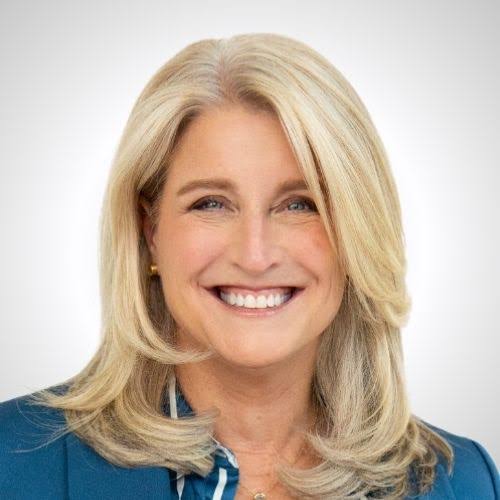
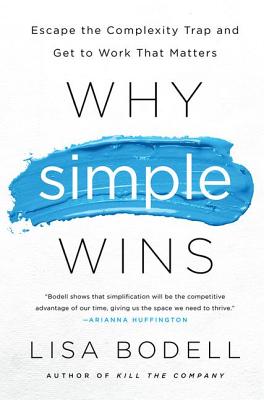
CEO, FutureThink • Bestselling Author, Why Simple Wins&Kill the Company • Innovation & Transformation Expert
Lisa Bodell is the founder and CEO of FutureThink, a global innovation and transformation firm that has worked with organizations including Google, Netflix, Pfizer, SAP, AT&T, and Citigroup.
Her work addresses an increasingly important problem in the AI conversation: organizations are frequently adding sophisticated new technology to systems, processes, and ways of working that are already unnecessarily complicated.
Lisa's premise is straightforward: AI cannot solve organizational complexity if leaders simply use it to accelerate broken work. Instead, organizations must eliminate friction, create capacity, rethink unnecessary processes, and develop the human judgment needed to deploy technology effectively. Her current speaking themes explicitly position AI as a thinking partner and simplification as a prerequisite for effective transformation.
- Speaking Fee/Travel - $45,000 plus hotel for up to two (2) nights and event city ground (for distances over 30 miles)

Speaker Highlights
Speaker Reel - https://www.youtube.com/watch?v=OgUUt6EE5pE
Why Lisa Is the Right Fit
- Brings the organizational-readiness perspective that often gets overlooked in AI conversations.
- Has direct relevance to financial services: FutureThink describes complexity, regulation, risk, and organizational drag as major barriers within the sector and specifically works with financial organizations around decision-making, adaptability, customer-centricity, and innovation.
- Challenges the assumption that adopting more technology automatically creates transformation.
- Highly practical and action-oriented — especially useful for executives who have moved beyond AI awareness and are now confronting implementation barriers.
- Creates a natural bridge into the subsequent partnership discussion: before deciding what technology, talent, data, or partners an organization needs, leaders should first determine what problem they are actually trying to solve and what organizational friction needs to disappear.
- Provides a differentiated perspective from technical AI experts while remaining highly relevant to the overall theme.
- Her provocative but accessible style should work especially well in a short keynote followed by executive dialogue.
Recommended Keynote
Unleash the Power of Simple: Eliminate Complexity, Reclaim Control, and Win in the Age of AI
Lisa would approach the AI conversation from a fundamentally different direction.
Rather than starting with "What can AI do?", she asks leaders to examine what is already broken inside their organizations before adding another layer of technology.
In financial services, where regulation, legacy processes, risk management, approval structures, and organizational complexity can dramatically slow innovation, that argument has particular relevance. FutureThink specifically identifies complexity as a threat to financial organizations because it slows decisions and diverts attention away from customers, strategy, and growth.
For the proposed format, Lisa could use the first 15 minutes to make one provocative point:
Bolting AI onto broken processes doesn't transform an organization. It simply allows the organization to do the wrong things faster.
The fireside could then examine:
- What leaders should simplify before investing further in AI
- Where legacy processes are preventing innovation
- How executives create organizational capacity for experimentation
- What human judgment remains essential as more work is automated
- How organizations distinguish meaningful transformation from technology adoption
- What leaders should stop doing in order to make room for what comes next
Her alternative topic, Igniting Innovation: AI-Enabled, Human-Led, could also work if Erin wants to emphasize creativity, competitive opportunity, and AI as a partner in thinking rather than primarily organizational simplification.

AI & Digital Transformation Expert • Author, Digital Darwinism • Founder, All We Have Is Now • Host, The Edge
Tom Goodwin is a globally recognized technology, innovation, and transformation expert focused on separating genuinely consequential change from the enormous amount of noise surrounding emerging technology.
He advises Fortune 500 companies and startups on transformation and innovation, is the author of Digital Darwinism, and hosts The Edge, a Euronews technology program. Tom describes his approach as a practical form of futurism: understanding which technologies are distractions, which ones fundamentally change business, and what leaders can actually do about them now. He has delivered more than 150 keynotes across more than 60 countries and builds customized presentations around each audience.
- Speaking Fee/Travel - TBD
- Availability - TBD
Speaker Highlights
Riding the wave of technology disruption and AI with Tom Goodwin | Experts Unleashed | Atlassian - https://www.youtube.com/watch?v=AggUmKlYfhM
Link to current Speaker Reel - https://www.linkedin.com/posts/tomfgoodwin_this-is-my-new-speaking-reel-for-2025-ugcPost-7282419421829115904-6mNh/
Why Tom Is the Right Fit
- Has an existing keynote specifically dedicated to The Future of Financial Services, eliminating the need to force-fit broader technology content into this industry.
- Particularly strong for addressing what is exciting, what is terrifying, and what is real versus hyperbole — separating consequential technological shifts from distractions is central to his work.
- Looks at innovation through multiple interconnected lenses: technology, consumer behavior, regulation, competitive threats, business models, and organizational transformation.
- His financial-services material explicitly spans insurance, lending, digital wallets, fintech, and emerging platforms, making it highly relevant to the composition of the audience.
- A provocative speaker who is comfortable challenging incumbent assumptions — valuable for an audience designed around discovery rather than conventional conference education.
- His customized approach makes the 15-minute provocation + fireside conversation format particularly natural.
- Provides an interesting bridge into the program's subsequent conversations around partnerships: rather than asking how established organizations can incrementally modernize, Tom encourages leaders to ask what they would build differently if they were starting today.
Recommended Keynote
The Future of Financial Services
Technology is changing the underlying assumptions upon which financial products, customer experiences, competition, and regulation have traditionally been built.
Across insurance, lending, payments, digital wallets, fintech, and the broader financial ecosystem, organizations must assess an increasingly complex set of technologies and determine which developments genuinely change the competitive landscape — and which are simply noise.
Tom explores emerging technology alongside changing consumer behavior, regulation, platform economics, API-based business models, AI, and other forces reshaping the sector. His broader 2026 speaking work also directly examines how organizations would redesign themselves if they could begin with a blank slate in an AI-driven world.
For this program, I would ask Tom to sharpen the opening around:
What actually matters now? What are financial institutions overestimating? What are they underestimating? And if you were rebuilding a financial-services organization for the next decade rather than protecting the last one, what would you do differently?
That provides an ideal provocation for the fireside conversation and for the partnership and competitive-strategy discussions that follow.

Former Chief Scientist, Amazon • Data Scientist & AI Strategist • Author, Data for the People
Dr. Andreas Weigend is a globally recognized authority on data, AI, consumer behavior, and digital transformation. As the former Chief Scientist at Amazon, he helped shape the company's early approach to data strategy and innovation.
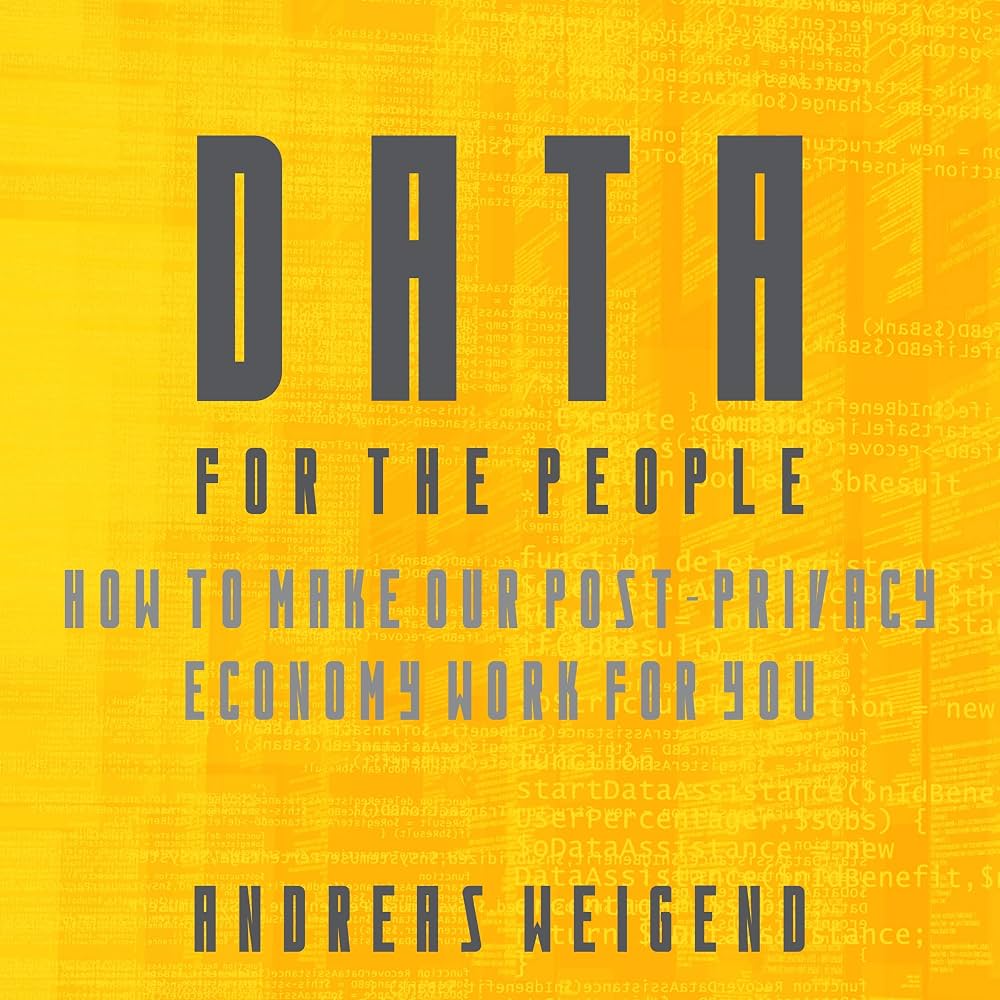
Today, Andreas advises organizations on AI and data strategy and directs the Social Data Lab. He has also taught at Stanford University and UC Berkeley and is the author of Data for the People: How to Make Our Post-Privacy Economy Work for You. His speaking work focuses on data strategy, AI and machine learning, digital transformation, and the changing relationship between individuals and organizations in a data-driven economy.
- Speaking Fee - $30,000
- Travel and Expenses - $1500 flat travel, plus Hotel Accommodations
Speaker Highlights
Data for the People - https://www.youtube.com/watch?v=mupTR-lnQfU
Why Andreas Is the Right Fit
- Former Chief Scientist at Amazon, giving him credibility from one of the defining companies of the data economy.
- Provides perhaps the purest data perspective among the proposed speakers — highly relevant for a gathering fundamentally centered on how data can better serve people.
- Has spent decades examining the relationship between data, customer behavior, technology, privacy, trust, and business value.
- Can challenge executives to think beyond AI tools toward the more fundamental questions: What data should we collect? What questions should we ask? What should we measure? Who benefits?
- Particularly valuable in financial services, where data creates enormous opportunity while simultaneously raising questions of privacy, transparency, consumer trust, regulation, and ownership.
- His advisory and teaching background makes him well suited for an intellectually curious, intimate executive audience rather than a conventional motivational keynote.
- The fireside format could allow the moderator to push Andreas into difficult territory around data power, privacy, AI decision-making, and the responsibilities organizations assume as their ability to understand customers expands.
Data Strategy for the AI Age: Better Questions, Better Decisions, Better Outcomes
Andreas' existing speaking portfolio includes Data Strategy for the Digital Age, The Future of AI and Machine Learning, Data for the People, and Digital Transformation.
As AI dramatically increases what organizations can infer, predict, automate, and personalize, how should financial leaders rethink the role of data itself?
The keynote could establish the premise that having more data or more sophisticated AI does not automatically create better decisions. Competitive advantage increasingly comes from asking better questions, establishing meaningful metrics, understanding customers differently, and determining where data can create mutual value rather than simply greater organizational visibility.
The fireside could then explore:
- Whether organizations are actually data-ready for AI
- What companies misunderstand about customer data
- The changing meaning of privacy in an AI-driven economy
- Trust as a potential competitive advantage
- Where data should remain proprietary versus where shared ecosystems create greater value
- How leaders distinguish genuinely useful AI applications from technological novelty
- What the next generation of financial-services experiences could look like when data is used to serve people rather than simply optimize transactions